
74 Athletes Just Co-Invested in a Prediction Market. The Ownership Era Is Here.
When Breanna Stewart and Connor McDavid buy into the same cap table, something structural has changed.

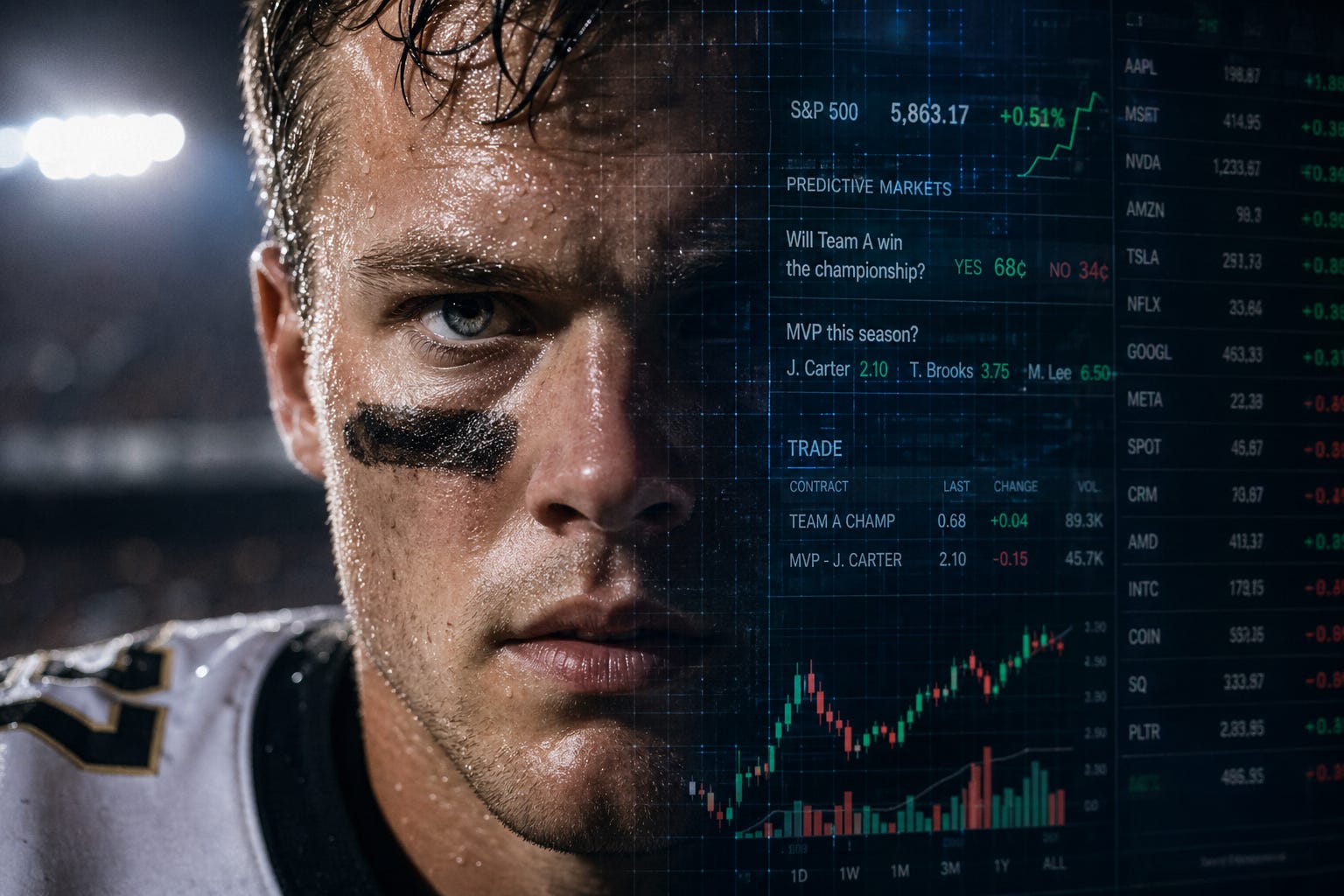
Athletes have always been the product. Now they’re buying the platform.
Earlier this month, Factory Holdings, a family office built for athletes, entertainers, and next-gen wealth creators led a $4.7 million investment into Kalshi’s Series E financing round, bringing together 74 investors across sports, entertainment, and business. PR Newswire The names on the cap table read like an All Star ballot: Marshawn Lynch, Richard Sherman, Diana Taurasi, Nneka Ogwumike, Breanna Stewart, Connor McDavid PR Newswire, and more. They came in alongside a16z’s Cultural Leadership Fund.
The round valued Kalshi at approximately $11 billion and included participation from Andreessen Horowitz, Sequoia Capital, CapitalG, ARK Invest, Charles Schwab, and Y Combinator. Yahoo!
This isn’t a celebrity endorsement play. Kalshi is the infrastructure layer for how real-world events get priced and traded. And athletes just bought a seat at that table.
Factory’s mission, according to founder and CEO Keenan Beasley, is straightforward: the people who shape culture should also own the systems they power. PR Newswire
Hard to argue with that.
Mental Model: First-Order vs. Second-Order Thinking
Most people look at this deal and think: athletes investing in a hot fintech company. That’s first-order thinking. It’s accurate, but it’s shallow.

Second-order thinking asks: what happens next, and then what happens after that?
If 74 athletes build fluency with prediction market infrastructure, how contracts are structured, how liquidity works, how regulated markets function, they become dramatically more sophisticated capital allocators. That changes who they trust with their money. It changes what deals they’ll evaluate. It changes what platforms they’ll eventually build or back.
The second-order effect of this investment isn’t just a return on Kalshi. It’s a cohort of high profile, high-influence individuals who now understand financial infrastructure from the inside. That’s a fundamentally different kind of athlete than the one who signs a brand deal and moves on.
Spencer’s Take
I’ve been building /mkt since December 2025, a platform that lets athletes tokenize their brand and earning potential using Reg A+ offerings with tZERO as trading infrastructure. The question I get most often is: are athletes ready for this?
The Kalshi deal is my answer.
Seventy four athletes didn’t accidentally end up on the same cap table. Factory organized them. That’s the important part. The infrastructure to aggregate athlete capital to make collective ownership possible without requiring each individual to have a family office, a GP relationship, and years of deal flow is being built right now.
That’s exactly the gap /mkt was built to address on the other side: the fan to athlete economic relationship. Fans want access to the upside of the athletes they follow. Athletes want to convert influence into durable ownership. Regulated markets are where those two things meet cleanly.
What Factory did with Kalshi is proof that athletes aren’t passive participants in the financial economy anymore. They’re learning to use the instruments. And when athletes understand how regulated markets work, every product built in that space gets a more sophisticated, more engaged set of potential partners.
The ownership era isn’t coming. It’s already here. The question for builders is whether you’re designing for the athletes who are still waiting to be told what to do with their money or the ones who are already on cap tables and asking better questions.
Build for the second group.
If this was useful, share it with someone who builds things. And if you want the full toolkit of 50 mental models, my book is coming soon.